
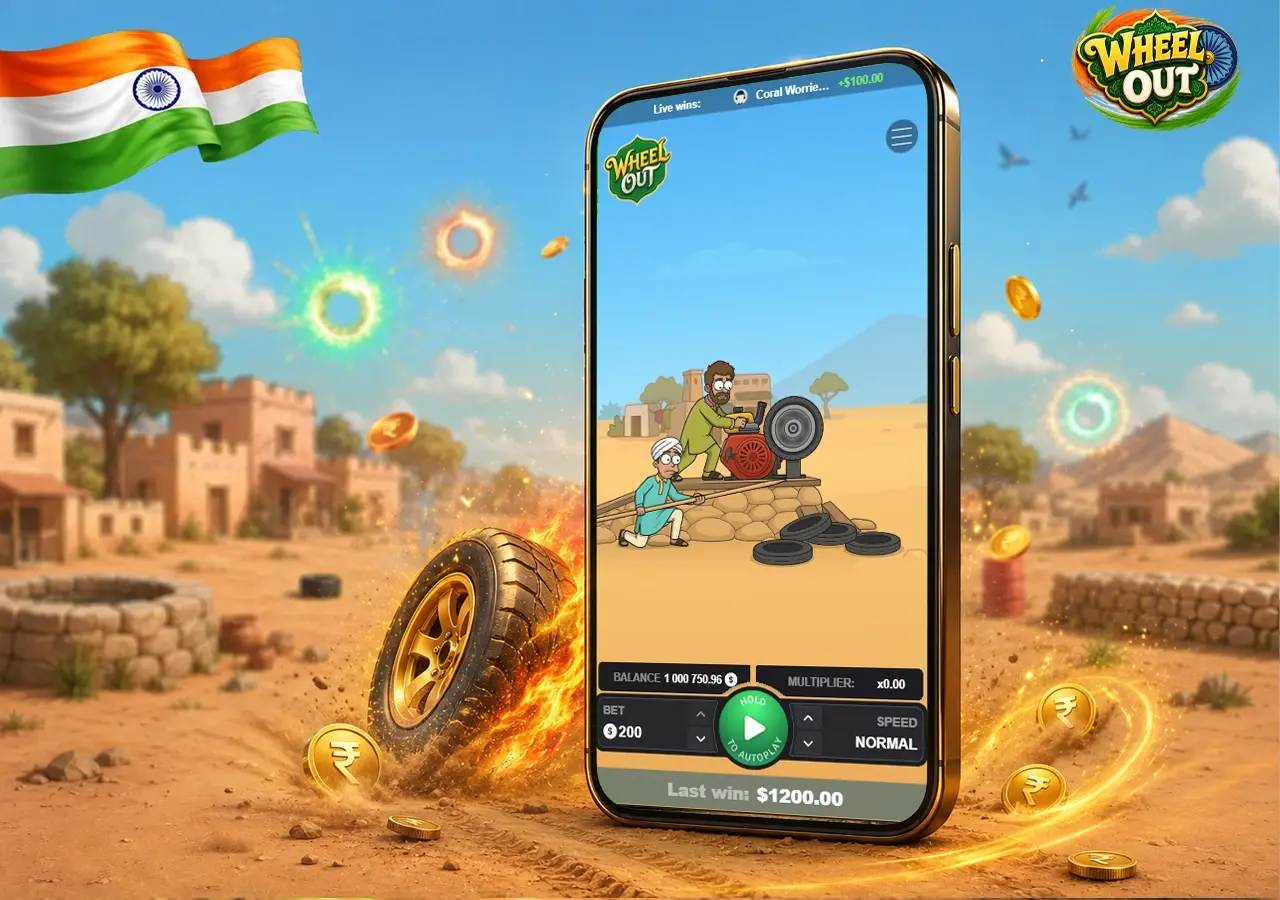
The Best Casinos to Play Wheel Out Game

Welcome Bonus
Up to 600 FS
18+ | Gamble responsibly
Welcome Bonus
700% up to 40,000 INR
18+ | Gamble responsibly

Welcome Bonus
700% up to 50,000 INR
18+ | Gamble responsibly

Welcome Bonus
500% up to 150,000 INR + 450 FS
18+ | Gamble responsibly

Welcome Bonus
150% up to ₹12,000
18+ | Gamble responsibly
Wheel Out Game: Play the Free Demo or Bet Real Money
The Wheel Out game is a new instant game from InOut Games, live since 23 June 2026. You launch a burning car tyre across a desert route, and the multiplier climbs as the wheel flies. Its official RTP is 96.5%, with the payout capped at $20,000, about ₹16.7 lakh. There is no manual cash-out. The wheel flies on its own until it lands for a win or crashes for a loss.
You can play Wheel Out two ways in India. Load the free demo in any state, or bet real money at a licensed operator that serves your region. Fix one idea early: an operator’s safety comes from which regulator licenses it and how it pays out, not from the country where its licence was issued.
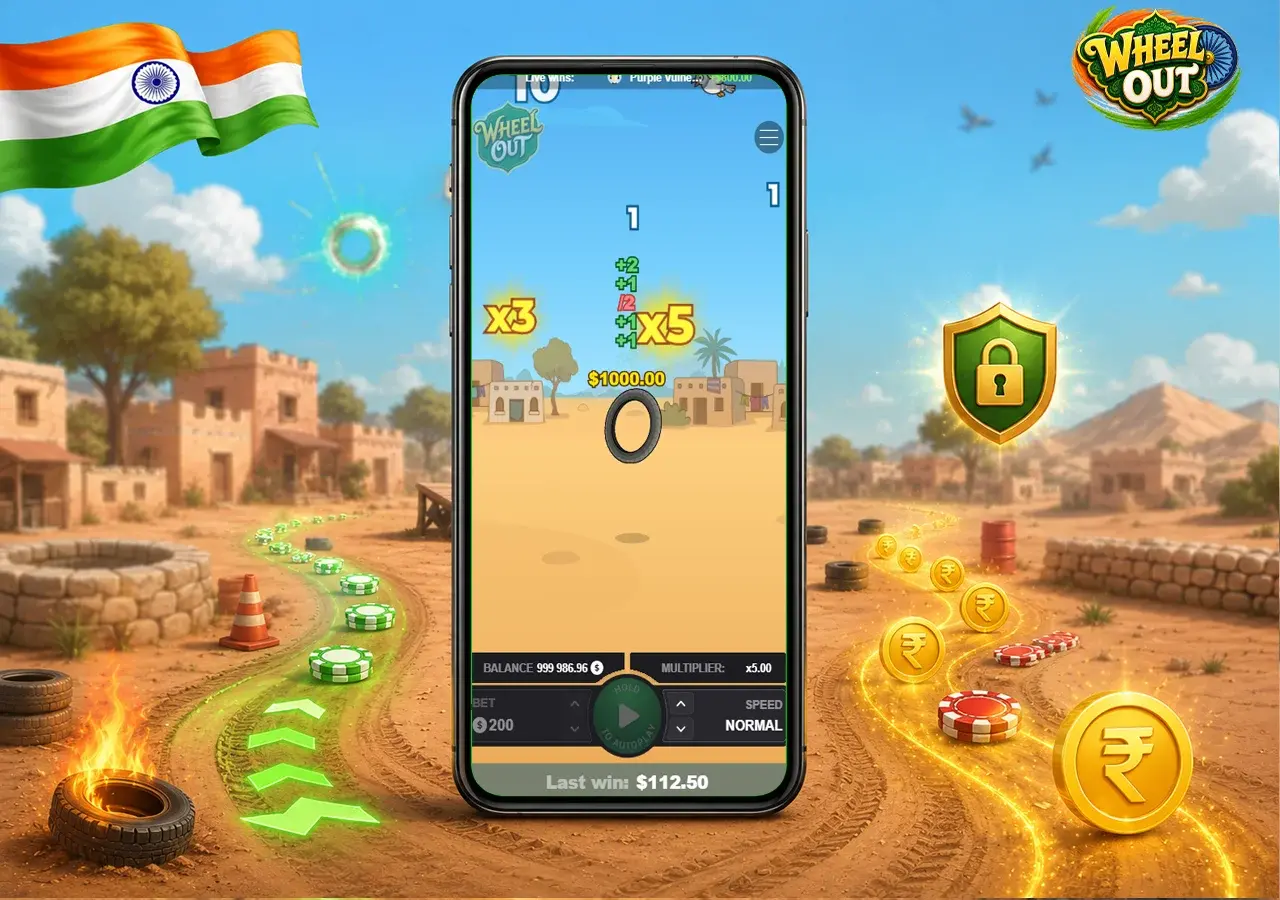
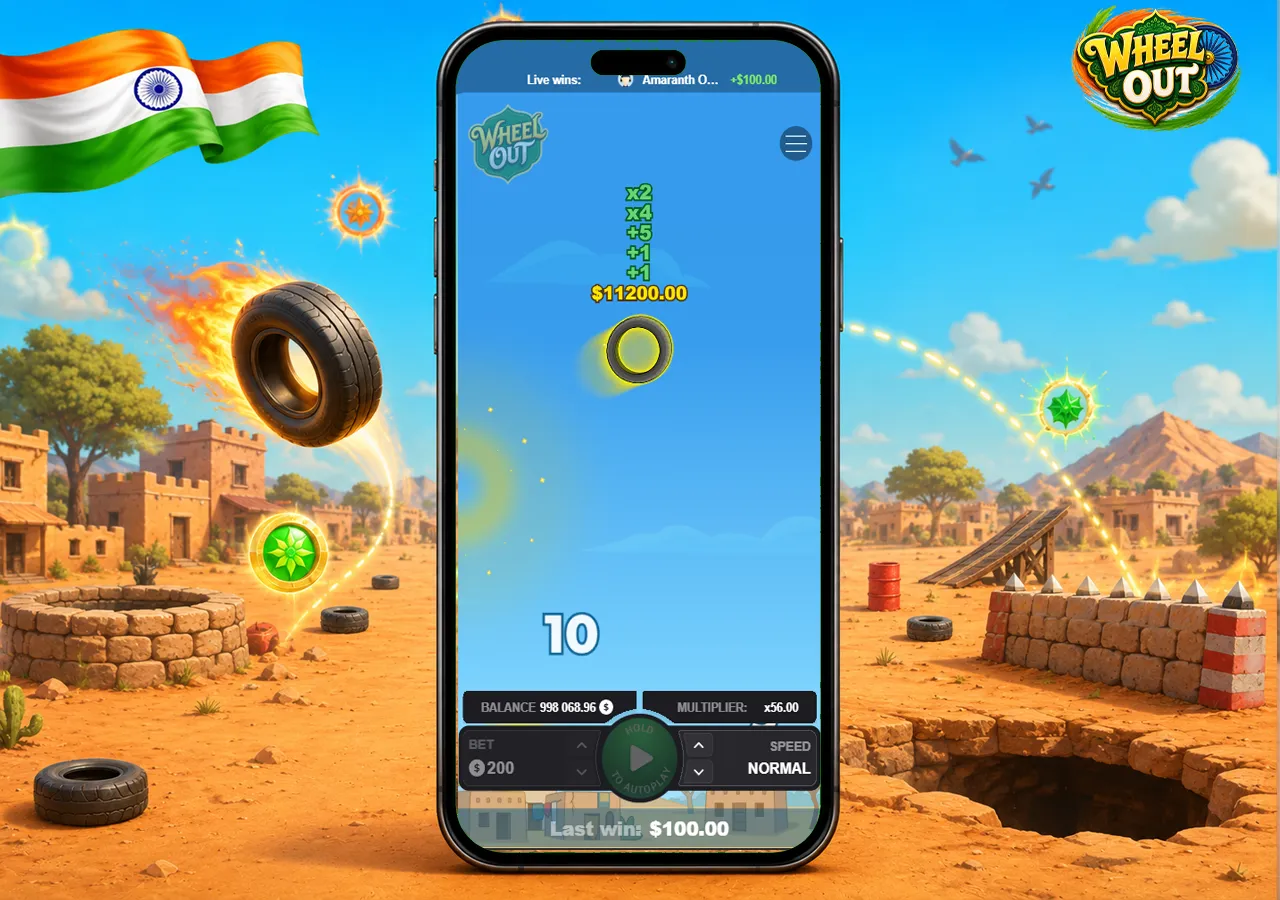
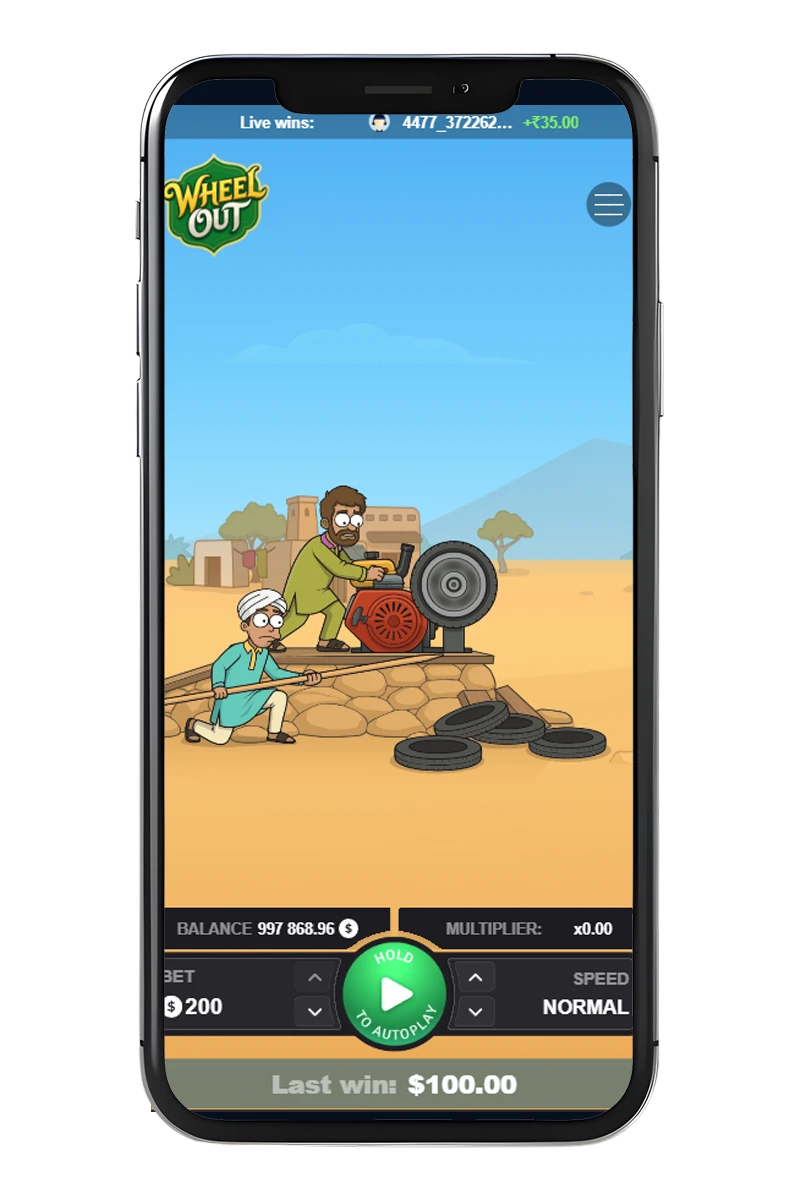
Mobile gameplay screenshots
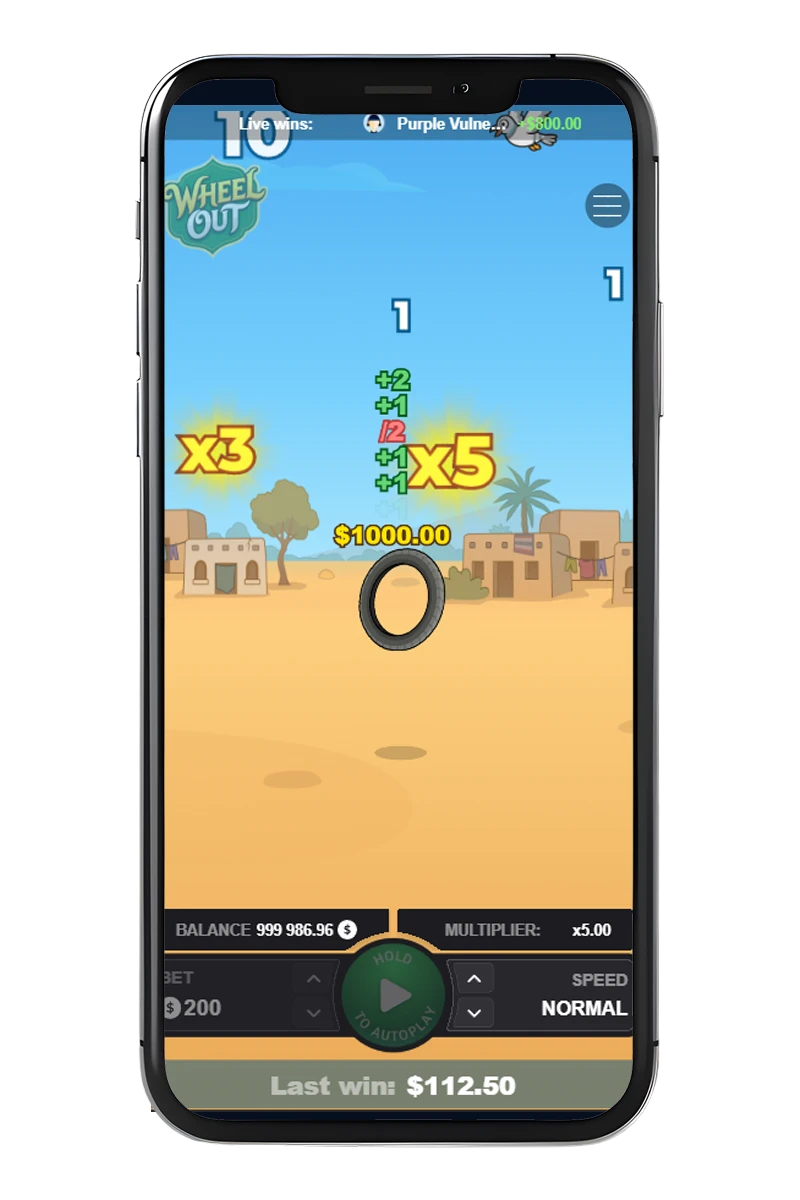
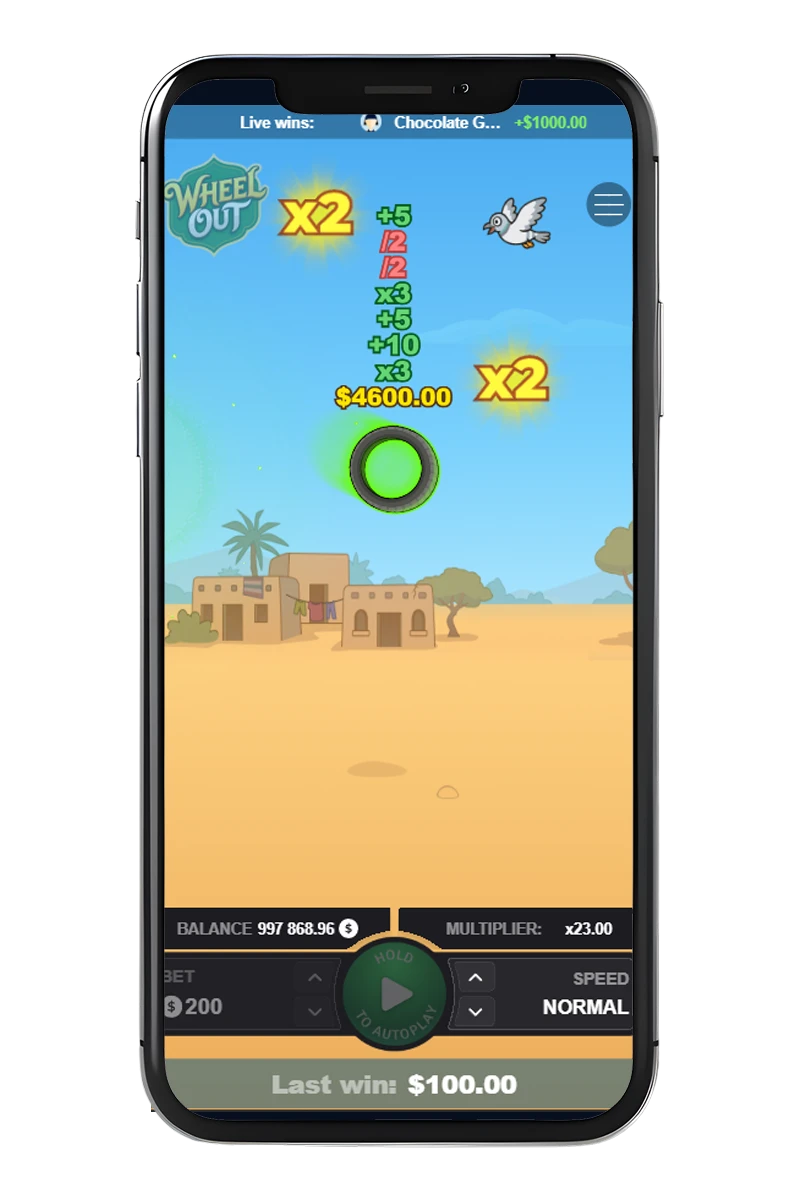
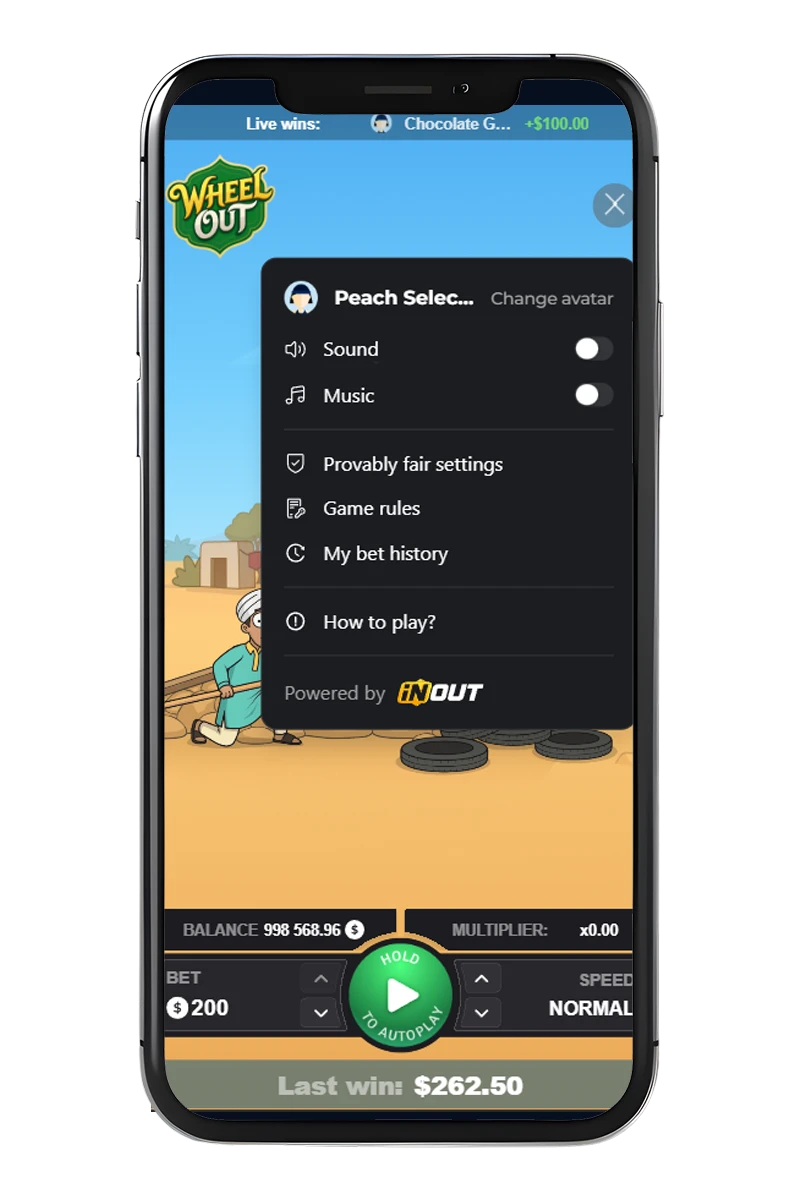
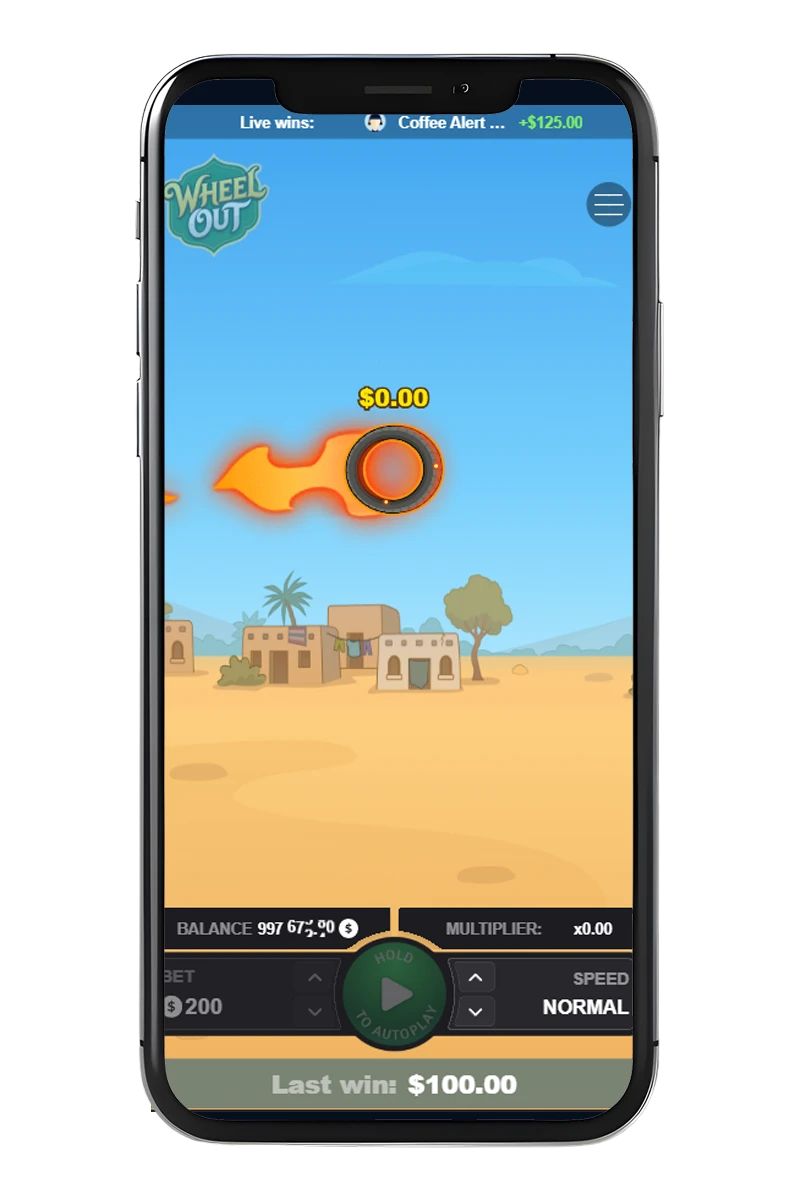
Wheel Out Demo – Play Free, No Registration
The Wheel Out demo loads straight in your browser. No registration, no deposit, no KYC. You play on virtual credits and keep every feature of the paid game, from the four speed modes to the Auto Game option.
Use it to learn the flight path before you risk a rupee, and watch how the multiplier reacts to a /2 Pigeon or a Wall. The demo works in every Indian state, unlike real money play. That gap matters, and the legality section below covers it.
Where to Play Wheel Out for Real Money in India
Real money access to Wheel Out depends on the operator, not the game. Below are five casinos that accept Indian players and run instant games. Some carry the full InOut Games library with the title live; one could not be confirmed. Pick on four checks: legality in your state, whether the site lists the game, INR and UPI support, and published withdrawal terms. These are affiliate listings and we may earn a commission, but the figures reflect each operator’s own terms.
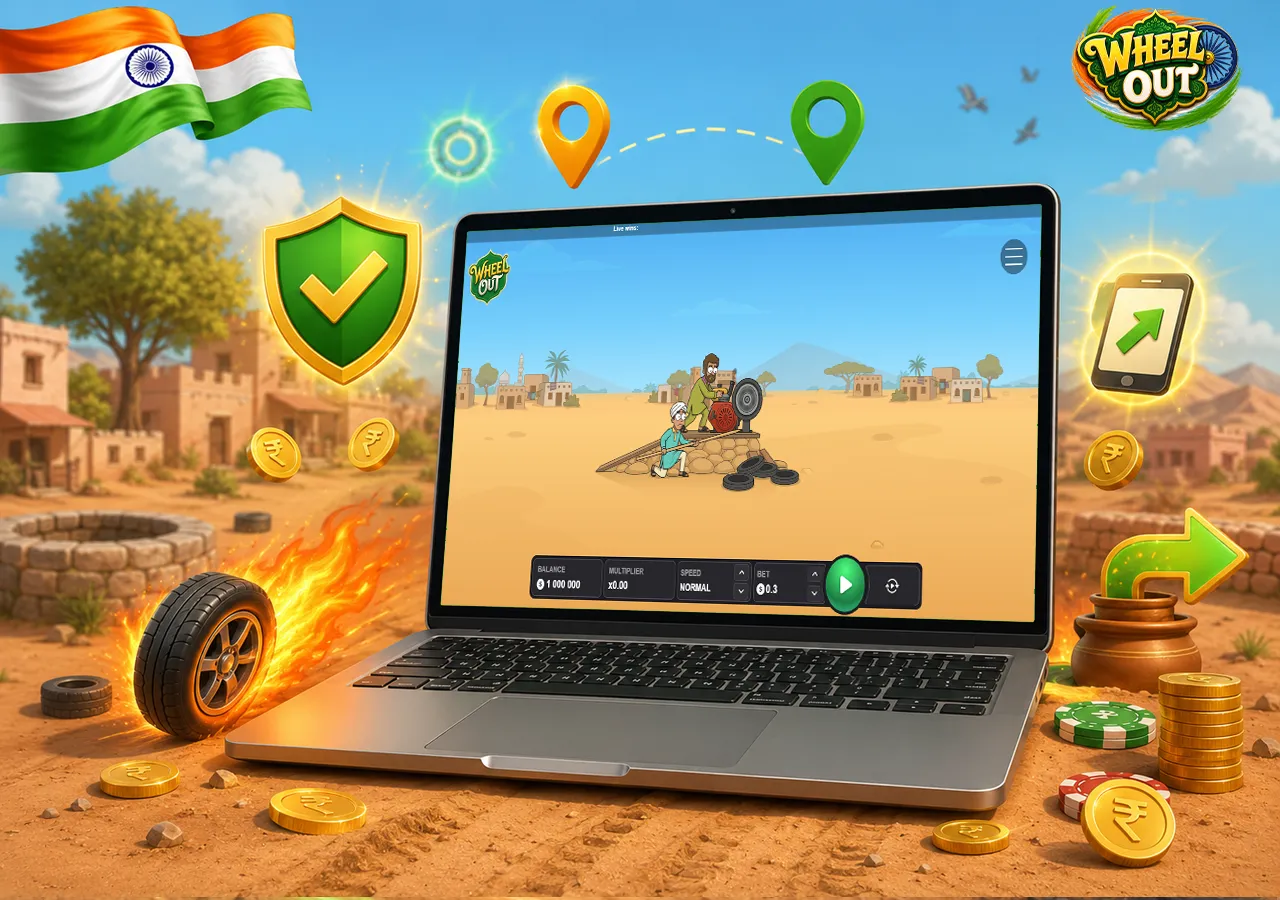
| Casino | License | Welcome bonus | Min dep | UPI / Paytm | Payout speed | Wheel Out / InOut |
|---|---|---|---|---|---|---|
| Lucky Star | Curaçao eGaming (#8048/JAZ2018-040) | 500% up to ₹75,000 (4 deposits) | ₹300 | Yes | Hours–7 days (post-KYC) | Not confirmed |
| 4rabet | Curaçao | 700% up to ₹4,000 · x20 · 7 days | ₹300 | Yes | Not stated | Yes (Wheel Out live) |
| Parimatch | Curaçao GCB (OGL/2024/1329/0629) | 100% up to ₹30,000 (instant) | Not stated | Login required | Up to 3 days | Yes |
| Batery | Curaçao, YouGmedia B.V. | Pack up to ₹1,50,000 · x40 | ₹300 | Login required | Not stated | Yes |
| Desi Casino | Curaçao CGA | 125% up to ₹20,000 · x7 slots | ₹200 | Yes | 24–48 h | Yes (Wheel Out) |
Lucky Star
Lucky Star runs on the 1WIN N.V. platform and takes Indian players in INR. New users get a 500% welcome package across four deposits, up to ₹75,000, from a ₹300 minimum, though the wagering is not stated openly. Deposits cover UPI, Paytm, PhonePe, RuPay, NetBanking and USDT; withdrawals go via IMPS or crypto and take up to seven days after KYC. Its Curaçao eGaming licence (#8048/JAZ2018-040) sets a basic RNG baseline. One catch: Wheel Out was not confirmed in the lobby, so check it is live before depositing.
4rabet
4rabet is one of India’s most recognised betting brands and runs in INR. Its crash game welcome offer gives 700% across four deposits, up to ₹4,000, with clear x20 wagering over seven days and a ₹300 minimum; bonus winnings are capped at the amount received. Indian payments include UPI, Paytm, PhonePe and Google Pay. The site carries InOut Games, and Wheel Out has its own live page in the 4RABET Exclusives section. Curaçao licensing covers the operator, though the public licence number and terms pages were not reachable at review time.
Parimatch
Parimatch holds the highest brand recognition of this group in India and processes everything in INR. Its instant games welcome bonus adds 100% up to ₹30,000, with wagering set as a 100% turnover of your deposit before withdrawal, and payouts inside three business days. Bank transfers, e-wallets and USDT are supported, while the full UPI list appears after login. Chicken Road 2 by InOut Games sits in the instant games tab, and Wheel Out shows up through search. Parimatch runs on a 2024 Curaçao Gaming Control Board licence (OGL/2024/1329/0629), a newer, stricter regime than older Curaçao permits.
Batery
Batery accepts Indian players in INR and centres its offer on a choice-based Welcome Pack. You pick an Aviator, slots or sports track, with totals up to ₹1,50,000 from a ₹300 minimum and steep x40 wagering; the Aviator bonus only clears inside Aviator. The exact India payment list sits behind a login, so confirm your method after signing up. Batery carries a dedicated InOut Games provider page, and Wheel Out is reachable through search. It holds a Curaçao licence under YouGmedia B.V
Desi Casino
Desi Casino leans into an India-first identity, runs in INR, and shows its payment list without a login. The instant games welcome bonus adds 125% up to ₹20,000, while the slots offer carries a low x7 wagering over seven days, from a ₹350 minimum. UPI, Paytm, PhonePe, USDT and NetBanking are available, and withdrawals clear in 24 to 48 hours. Chicken Road 2.0, Wheel Out and other InOut Games titles sit in the Crash and Fast Wins section. Its Curaçao Gaming Authority licence protects payouts and RNG fairness, though the number is not published and the operator, Desiplay, is small.
Wheel Out at a Glance: RTP, Max Win & Key Stats
The table sets out the Wheel Out RTP, max win and other key stats, each checked against the official InOut game page on 16 July 2026. Unpublished figures are marked as such.
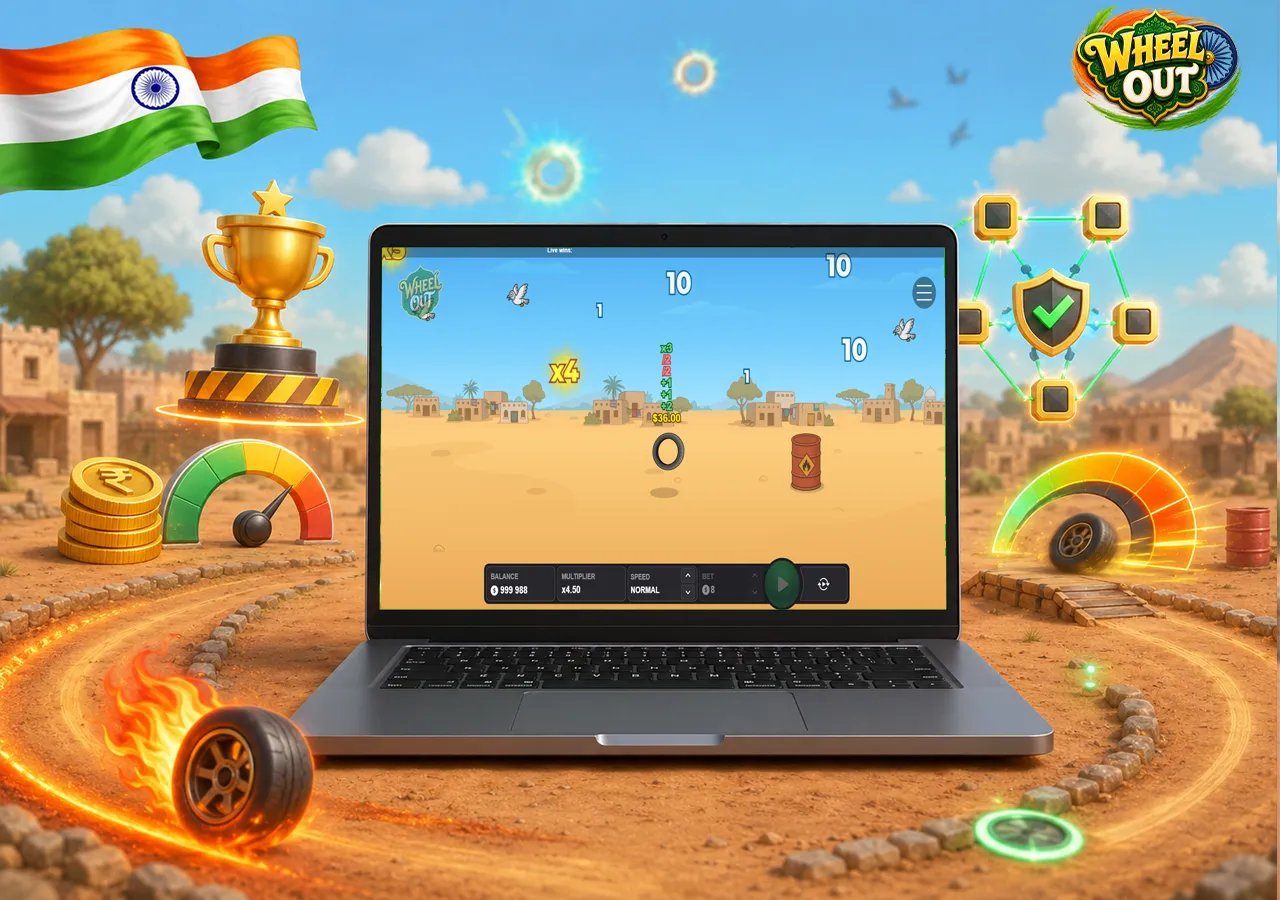
| Feature | Details |
|---|---|
| Provider | InOut Games (IOGr B.V.) |
| Game type | Instant / flight-path, no manual cash-out |
| RTP | 96.5% official; some third-party listings show 97% (unconfirmed) |
| Volatility | Not officially stated; rated high volatility by third parties |
| Max payout cap | $20,000 (approx ₹16.7 lakh), a hard cap |
| Max multiplier | up to 10,000x (third-party figure, not on the official page) |
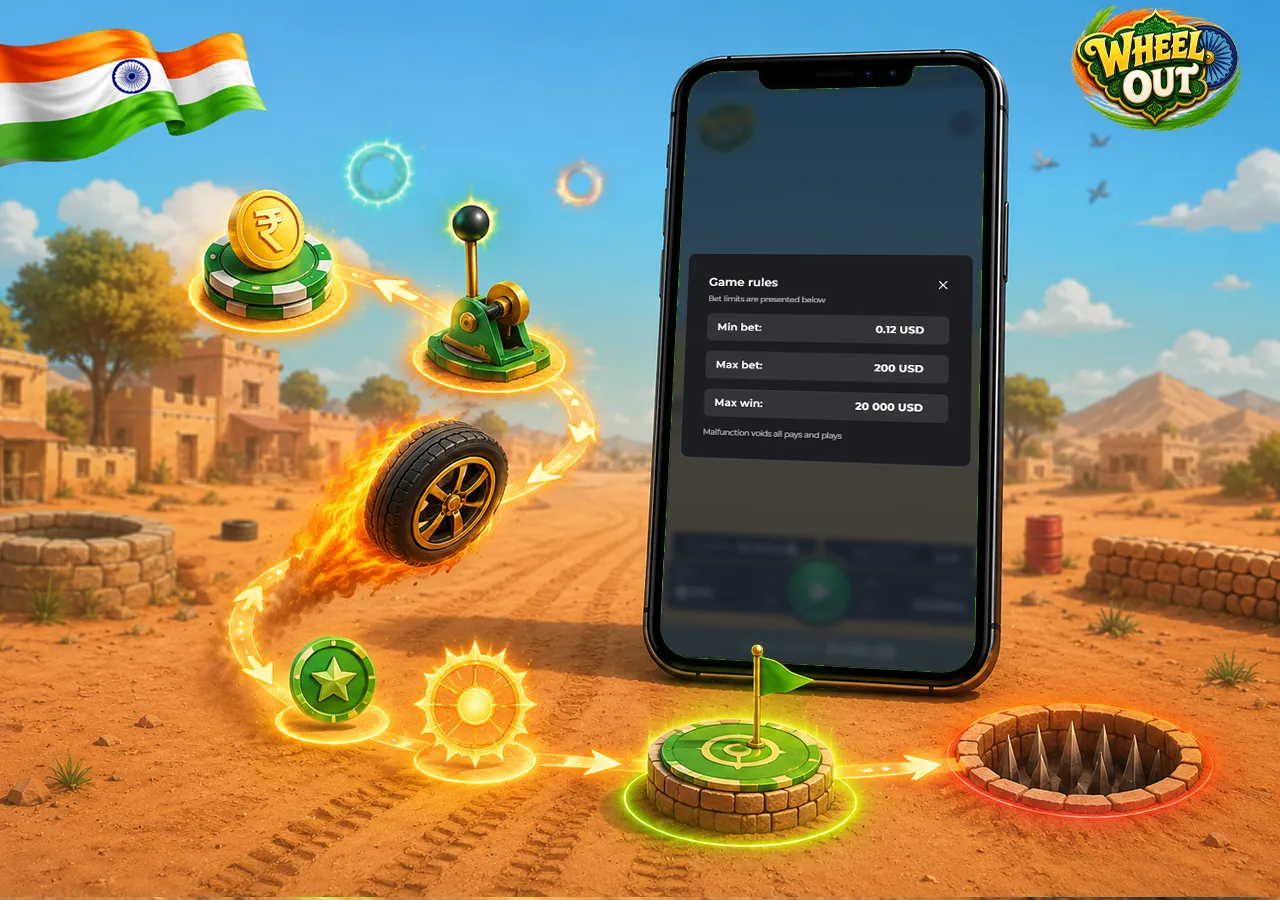
| Bet range | $0.12–$200 (INR limits set by the operator) |
| Release date | 23 June 2026 |
| Demo mode | Yes, free, no registration |
| Platforms | Desktop and mobile browsers |
| Speed modes | Slow / Normal / Fast / Ultra, plus Auto Game |
| Provably fair | Yes, client and server seed via SHA-256 |
| India access | Demo everywhere; real money via licensed operators only |
What Is Wheel Out?
Wheel Out is an instant game, not a slot: no reels, no paylines, no free spins. Each round is a single launch: you set your bet, the wheel takes off, and the multiplier grows along the route. It sits in the crash game family, alongside Aviator, though it plays differently.
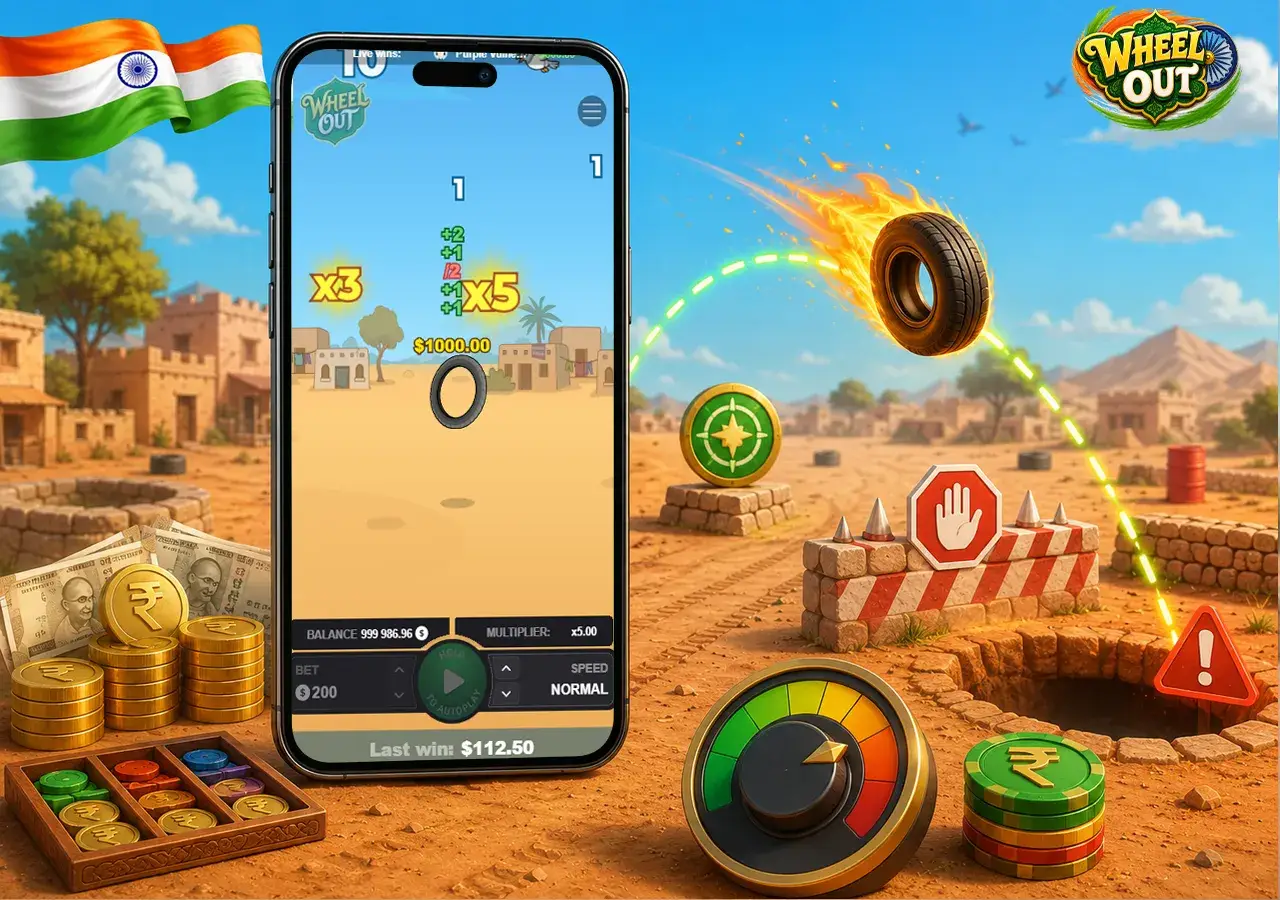
The wheel itself is a real car tyre wrapped in an orange flame, easy to spot against the sand. Bonus symbols lift your win as it moves, while hazards can cut it or end the round. Land safely and you bank the win; drop into the pit or hit a wall and the round is lost.
From a Viral Trend to an Instant Game
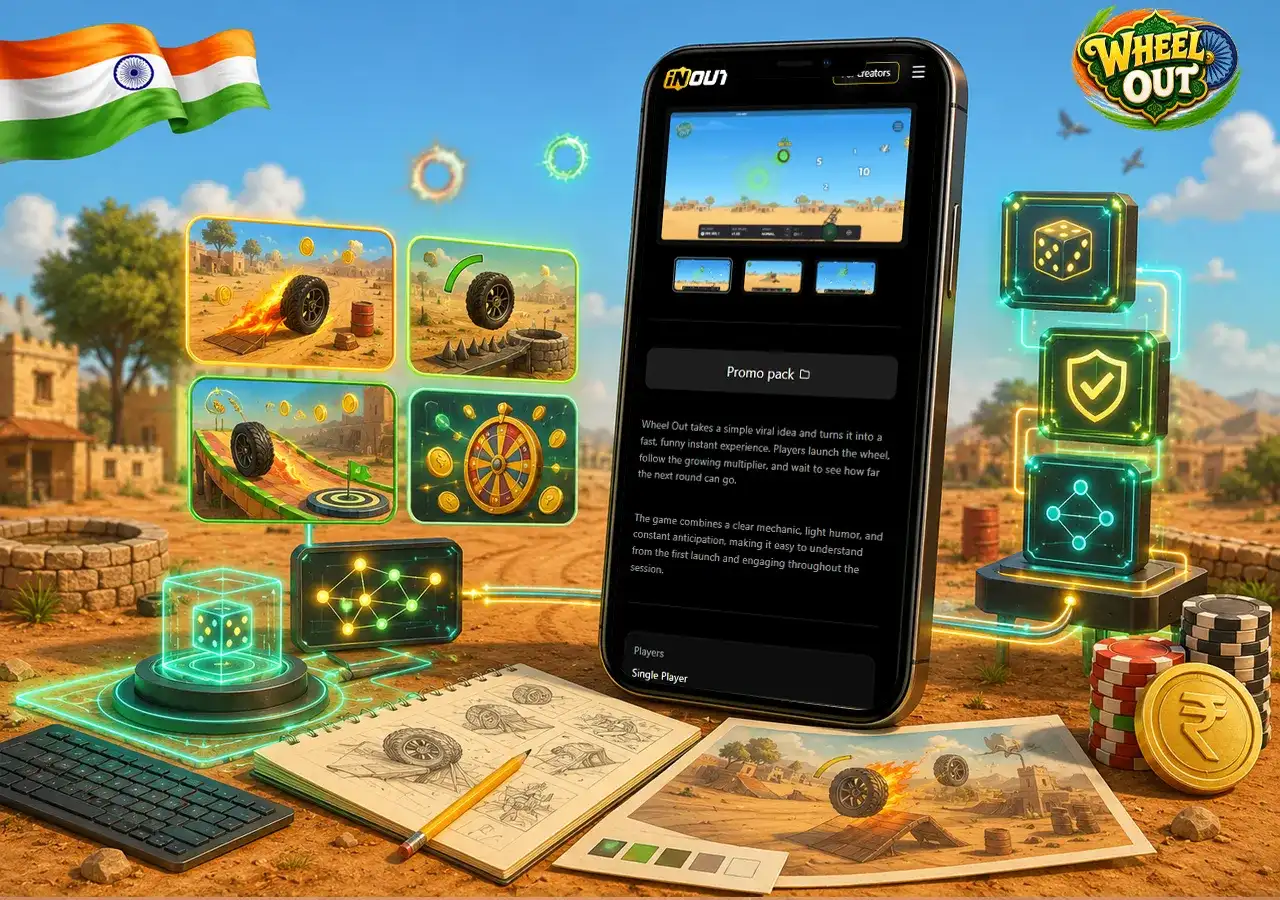
The concept did not come from nowhere. Wheel Out builds on the viral clip of a runaway tyre bouncing through the desert, an image many players across the subcontinent will recognise. InOut calls it a simple viral idea turned into a fast, funny instant game. That desert setting felt instantly familiar the first time I loaded it, which is a real hook for an Indian audience.
How to Play Wheel Out: Step-by-Step
Getting into a round takes seconds, and once you press SPIN the outcome is locked, with no early cash-out. Set the speed first: on Slow, a round ran six to eight seconds when I tested it, long enough to read every symbol. Then follow these five steps from the game’s guide:
- Place your bet by choosing your stake amount
- Launch the wheel by pressing SPIN, and the mechanic pulls the lever
- Watch the wheel fly along its desert route
- Collect the symbols along the way as they change your running win
- Win when the wheel lands safely, or lose if it drops into the pit or hits a wall
Wheel Out Symbols & Mechanics Explained
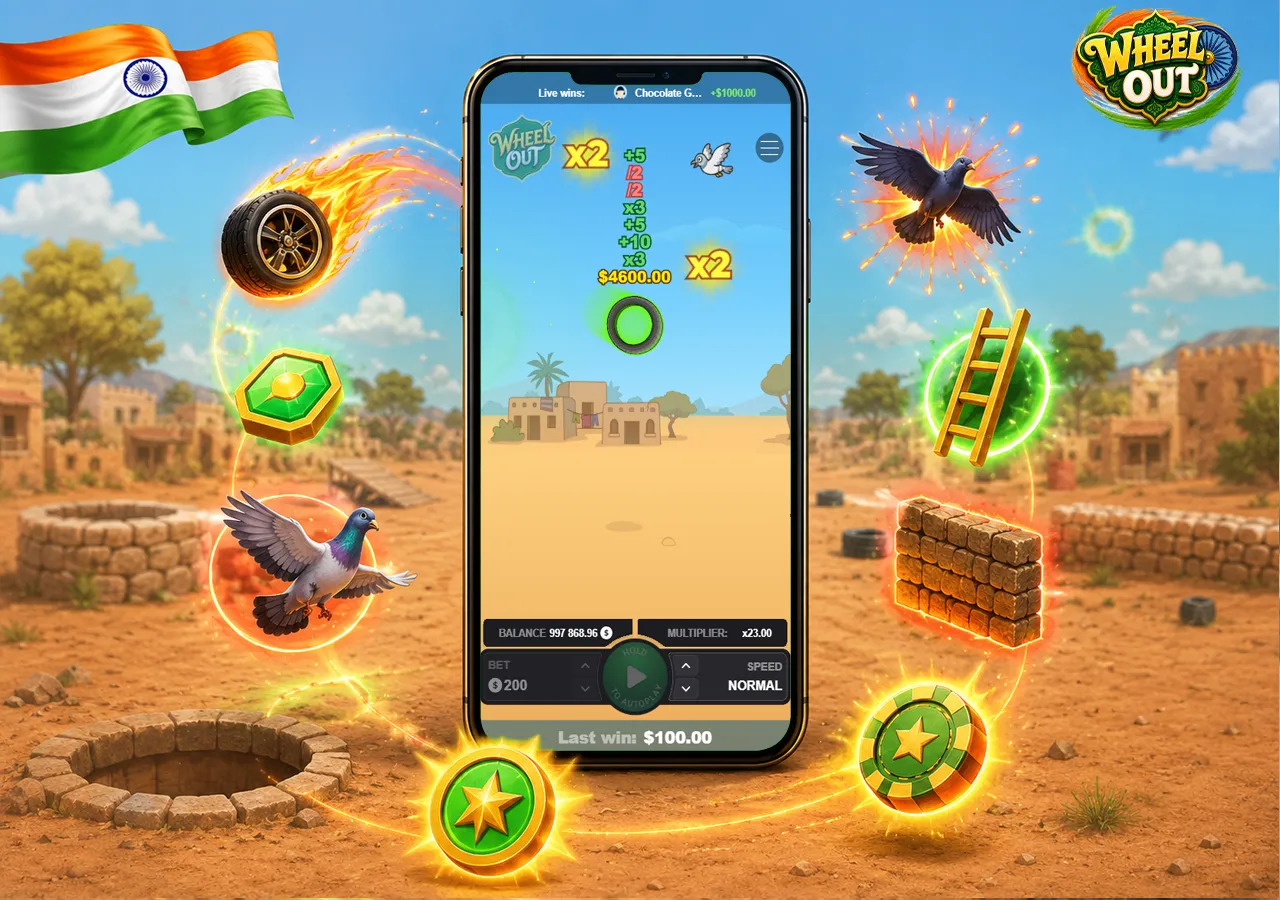
The route mixes rewards and dangers: bonus symbols raise your win, penalties cut it, and hazards can end the round outright. The table below breaks down every symbol.
| Symbol | Effect | Type |
|---|---|---|
| +1 / +2 / +5 / +10 | Adds a fixed amount to your running win | Adder (bonus) |
| ×2 / ×3 / ×4 / ×5 | Multiplies your current win | Multiplier (bonus) |
| /2 Pigeons | Halves your current win | Penalty |
| Ladder Holder | Saves the wheel from the pit and relaunches it higher | Saver (bonus) |
| Wall | Ends the round with a loss on impact | Hazard |
| Petarda Crow | Sudden drop, but your current win stays | Hazard |
Why the Landing Beats the Bonuses
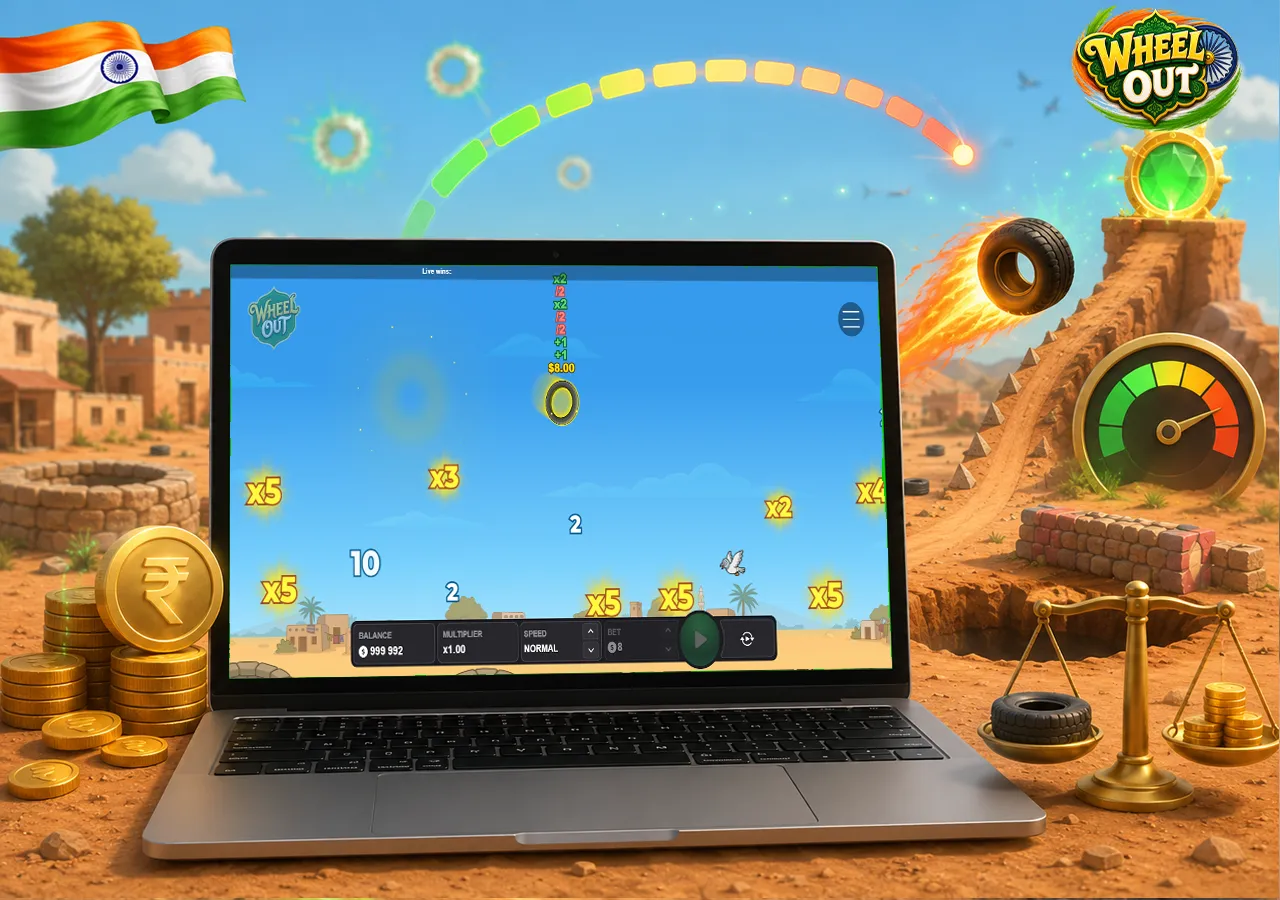
Here is the part new players miss. A wheel loaded with ×2 and ×5 symbols still pays zero if it never lands; the multiplier only counts once it touches down. I watched a demo round hover over the pit at ×0.50 while symbols kept stacking, then drop in for nothing. Track the hazards as closely as the bonuses, since the pit and wall wipe the round instantly.
Wheel Out RTP 96.5% & Volatility Explained
The Wheel Out RTP is 96.5% on the official InOut game page. Some third-party listings show 97%, but that figure is absent from the game client and the provider’s site, so treat it as unconfirmed. RTP is a long-run average; it says nothing about your next spin or session.
Volatility is trickier. InOut does not state it officially. Third-party sources and the gameplay point to high volatility, meaning wins are rarer but can be larger. Set a win target and a loss limit before you start, and stick to both.
What RTP Does Not Tell You
A healthy RTP is not a promise. It says nothing about your session, whether the next round pays, or how often the big multipliers hit. It also cannot validate a betting system, since each round runs independently. The only number that reflects your risk is the spending limit you set.
Wheel Out vs Aviator vs JetX
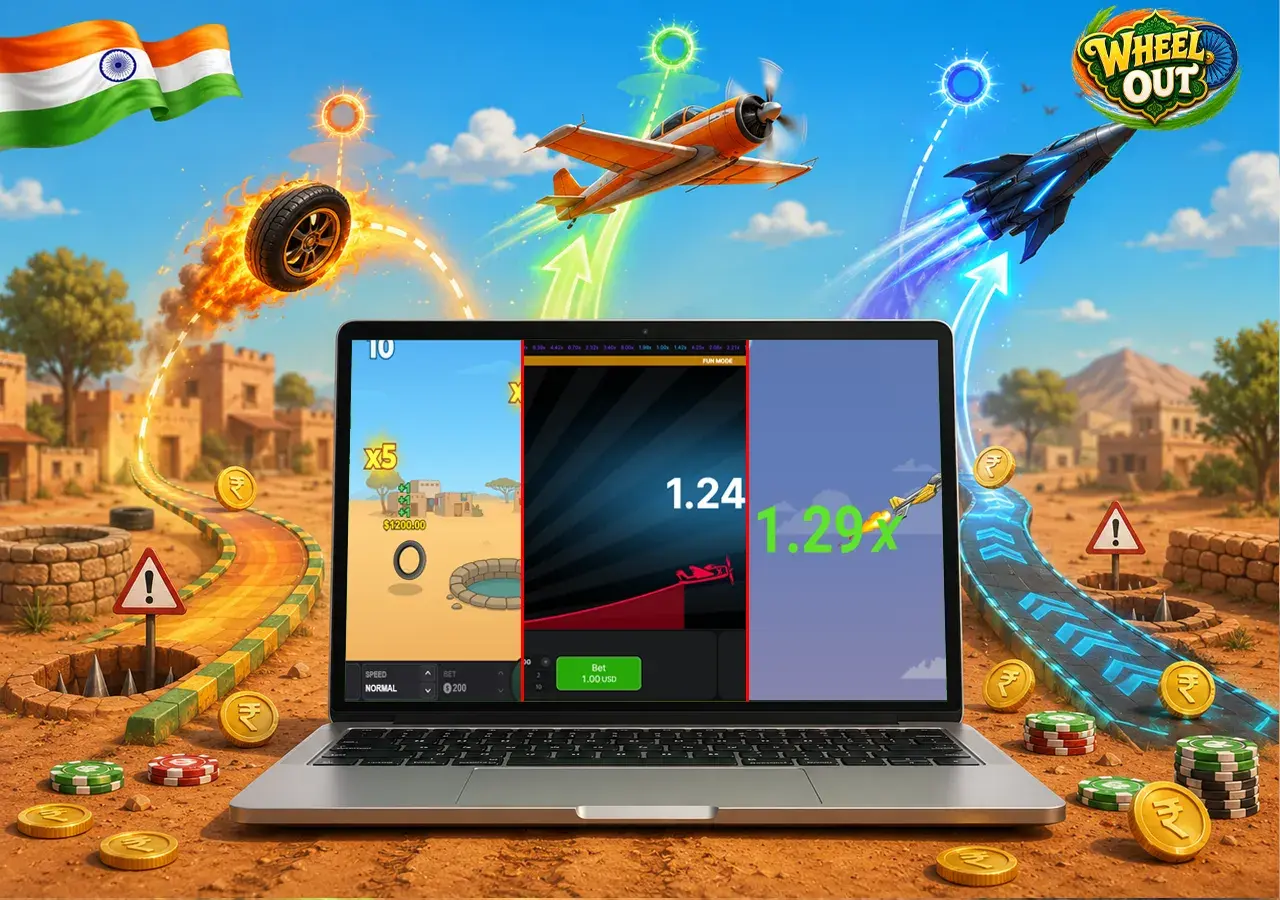
Wheel Out sits beside Aviator and JetX as a fast crash game in India, but the feel is what separates them. The RTP gap is small. The real difference is format: Aviator and JetX let you cash out mid-flight, while Wheel Out locks the round at launch.
| Game | RTP | Type |
|---|---|---|
| Wheel Out | 96.5% | Instant / flight-path |
| Aviator | 97% | Crash |
| JetX | 96.5% | Crash |
Deposits & Withdrawals in India: UPI, Paytm & More
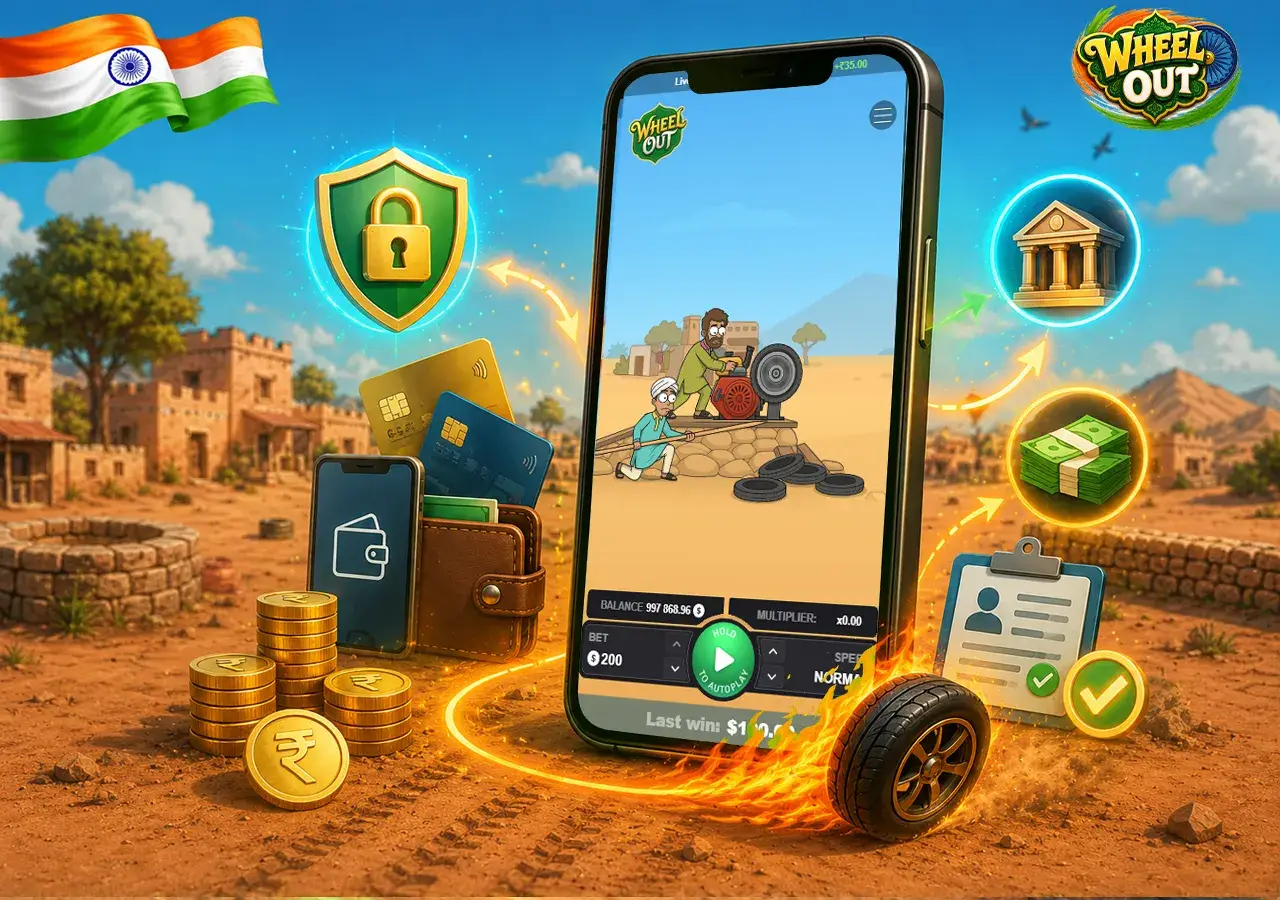
Payments are built around Indian methods. UPI apps clear fastest, cards and NetBanking are slower, and your first withdrawal waits on KYC. Minimums are set by each operator.
| Payment method | Min deposit | Withdrawal time | India |
|---|---|---|---|
| UPI | Set by operator | 15 min–2 h | Yes |
| Paytm | Set by operator | 15 min–2 h | Yes |
| PhonePe | Set by operator | 15 min–2 h | Yes |
| Google Pay | Set by operator | 15 min–2 h | Yes |
| NetBanking | Set by operator | 2–24 h | Yes |
| RuPay / Visa / Mastercard | Set by operator | 3–24 h | Yes |
| Crypto (USDT) | Set by operator | 15 min–1 h | Select operators |
Wheel Out App
Start your Wheel Out adventure now!
Wheel Out on Mobile: Browser & APK Safety
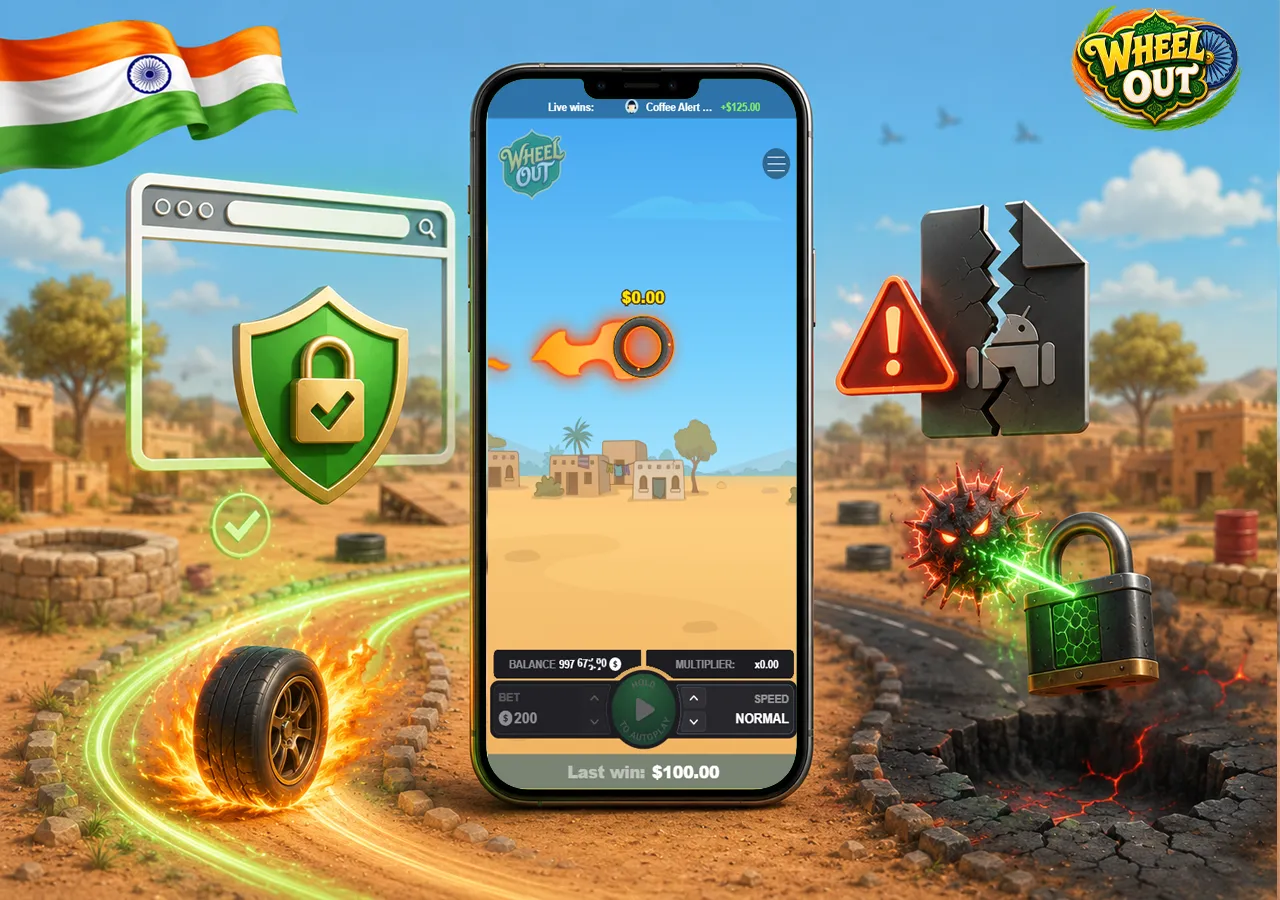
You do not need an install to play. The Wheel Out game runs in a mobile browser like Chrome, matching the desktop controls. On my phone the tyre stayed easy to follow, except on Ultra where it vanished in a blink. There is no official Wheel Out app or APK, so any file claiming to be one carries a malware risk.
If you want an app, only use one from a licensed operator’s own site. A Wheel Out game download from a random forum or ad is not worth the risk to your device or money.
Wheel Out Winning Tips & Bankroll Strategy
No trick beats the wheel, and chasing losses empties an account fast. A few habits protect your bankroll instead:
- Start in the free demo until the flight path feels familiar
- Keep the speed on Normal so you can read the symbols
- Split your bankroll into 50 or more units and bet small
- Set a win target and a loss cap, then walk away when you hit either
- Treat the reported 10,000x multiplier as a rare outlier, not a goal
What You Can’t Control
Some things are fixed the moment you act. After you press SPIN the result is already decided, rounds are independent, and a losing streak never makes a win due. Your stake and your limits are the only levers you hold. In the demo, Auto Game switched on when I held SPIN, letting me run rounds hands-free.
Wheel Out Pros & Cons
The game earns its appeal honestly, and its limits are just as clear.
The Strength
The Trade-offs
Is Wheel Out Legal in India?
Whether the Wheel Out game is legal for real money in India depends on your state. India regulates online real-money play at the state level, not nationally. Some states allow it, others restrict or ban it, and the rules keep shifting. Confirm your state’s current position before you deposit.
The demo is a different matter. Playing for free is legal everywhere, since no real money changes hands. For real-money play, use only a licensed operator that legally serves your region. Keep two ideas apart: holding a licence is not the same as real-money play being legal in your state.
How We Reviewed Wheel Out
We tested the Wheel Out game before writing this review. Our author played the free demo across all four speed modes and checked every spec against the official InOut game page on 16 July 2026, flagging anything the provider does not publish.
Operators were judged on the same checks: state legality, a live Wheel Out listing, INR and UPI support, and published bonus and withdrawal terms. These are affiliate listings, so we may earn a commission when you sign up. That does not change a rating; an operator that hides its terms is marked down.
Play Responsibly
Wheel Out is entertainment, not a way to earn. Only stake money you can afford to lose, and never bet to recover a loss. Play is limited to adults aged 18 and over.
Licensed operators offer tools that help, from deposit caps to time limits and self-exclusion. If the game stops being fun, use them or step away. National helplines are available if gambling feels like a problem.
About InOut Games
InOut Games is the studio behind Wheel Out, operating under the legal entity IOGr B.V. It builds instant and crash game titles, and its catalogue held nine games at review time, including Joker Pyre and Ice Fish. The Wheel Out game joined that lineup on 23 June 2026.
The studio licenses its games as a B2B provider under an Anjouan licence, with the number not published. Every round uses provably fair technology, pairing a client and server seed through SHA-256. Anjouan is a light B2B framework, so the operator you play at matters far more for safety than the provider’s licence.
Wheel Out FAQ
Quick answers to the questions Indian players ask most about the game.
Is Wheel Out real or fake?
What is the Wheel Out RTP?
What is the maximum win in Wheel Out?
Is there a free Wheel Out demo?
Is Wheel Out legal in India?
Can I play Wheel Out for real money?
Can I deposit with UPI?
Is there a Wheel Out app or APK?
What is the minimum bet in rupees?
Does Wheel Out have a trick or system?
Who made Wheel Out?
Is Wheel Out high volatility?